
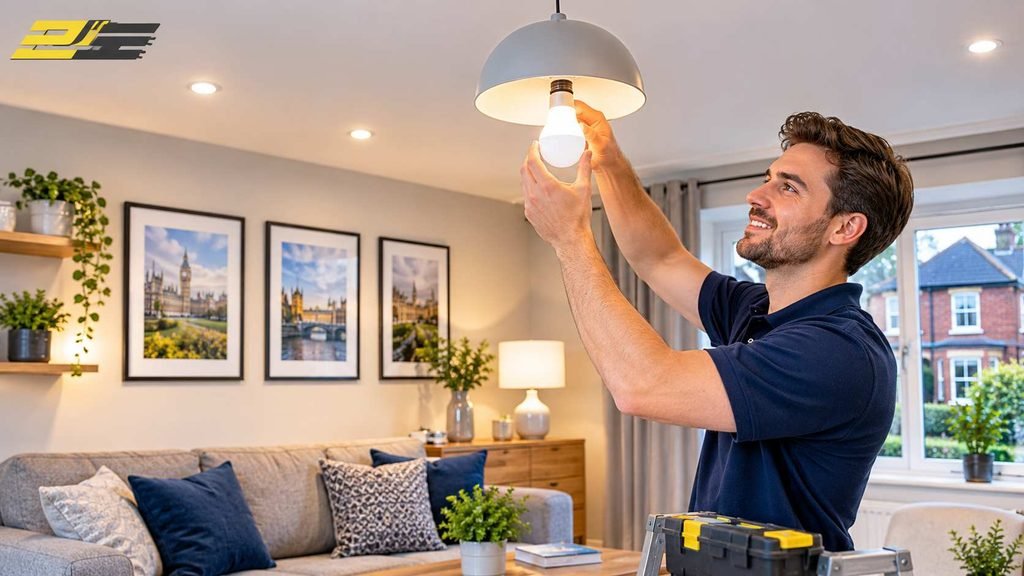
Lighting is an essential part of every home, but traditional halogen bulbs and older lighting systems can use more electricity than necessary. Upgrading to LED lighting is a practical way to reduce energy consumption, lower household electricity bills and improve lighting efficiency. Understanding how LED lighting improves energy efficiency in UK homes can help homeowners make informed decisions when upgrading their lighting.
Whether you live in a traditional London house, a modern apartment or a family home elsewhere in the UK, choosing suitable LED lights can make everyday lighting more efficient. In this guide, we explain how LED technology works, its main benefits, how to choose the right lights and when professional electrical installation may be needed.
If you are considering upgrading your home lighting, explore the electrical services offered by BSAG Electrical to learn more about available electrical solutions.
What Is LED Lighting?
LED stands for Light Emitting Diode. It is a lighting technology that produces light when an electrical current passes through a semiconductor.
Unlike traditional incandescent bulbs, which generate light by heating a filament, LEDs produce light more efficiently and waste less energy as heat.
LED bulbs are available in different shapes, sizes, brightness levels and colour temperatures. They can be used in ceiling lights, spotlights, downlights, wall fittings, table lamps and outdoor lighting.
They are also available in different designs to suit various rooms and lighting requirements, making them a flexible option for UK homes.
7 Ways LED Lighting Improves Energy Efficiency in UK Homes
Switching to LED lighting can improve the way electricity is used throughout your property. Here are seven important benefits homeowners should understand.
1. Uses Less Electricity Than Traditional Bulbs
One of the biggest advantages of LED lighting is its lower electricity consumption.
LED bulbs can produce a similar level of brightness to traditional halogen bulbs while using significantly less power. According to the Energy Saving Trust, LEDs use around 80% less electricity than halogen bulbs for comparable light output.
For example, replacing an older 50W halogen spotlight with a suitable lower-wattage LED alternative can reduce the electricity required to produce similar brightness.
When several bulbs are replaced throughout a property, the combined reduction in electricity consumption can make a noticeable difference over time.
2. Helps Reduce Household Electricity Bills
Because LED bulbs consume less electricity, they can help reduce the amount households spend on lighting.
The actual savings depend on several factors, including:
- Number of bulbs in the property.
- Daily lighting usage.
- Electricity tariff.
- Wattage of the existing bulbs.
- Brightness and efficiency of replacement LEDs.
The Energy Saving Trust estimates that replacing remaining halogen spotlights with LEDs could save a typical household around £45 annually in Great Britain.
Although lighting represents only part of a household’s total energy use, upgrading inefficient bulbs is a relatively straightforward way to reduce unnecessary electricity consumption.
3. Lasts Longer and Requires Fewer Replacements
LED lights generally have a much longer operating life than traditional halogen bulbs.
Many LED products are designed to operate for tens of thousands of hours, although actual lifespan varies depending on product quality, operating conditions and usage.
A longer lifespan offers several advantages:
- Fewer replacement bulbs are needed.
- Less time is spent changing failed lights.
- Reduced waste from discarded bulbs.
- Lower long-term replacement expenses.
For homeowners, this means LED lighting can provide a practical combination of energy efficiency and convenience.
4. Produces Less Unnecessary Heat
Traditional halogen bulbs produce considerable heat while operating. LEDs are more efficient at converting electricity into visible light, so they generally produce less wasted heat.
This can be particularly useful in smaller rooms, enclosed spaces and areas where several lights operate together.
However, LED products still generate heat within their electronic components. Proper ventilation and installation according to the manufacturer’s instructions remain important.
5. Provides Efficient Lighting for Different Rooms
LED lighting is available in different brightness levels and colour temperatures, allowing homeowners to select suitable lighting for each room.
For example:
- Kitchens: Bright, practical lighting can improve visibility around worktops and cooking areas.
- Living rooms: Warm white LEDs can create a comfortable atmosphere.
- Bedrooms: Softer lighting can provide a relaxing environment.
- Bathrooms: Suitable bathroom-rated LED fittings can provide effective illumination.
- Hallways and stairs: Well-positioned LED lights can improve visibility and reduce unnecessary lighting.
Choosing the right brightness is important. Instead of comparing bulbs by watts alone, check their lumen output, which indicates how much visible light they produce.
6. Supports Smarter Lighting Controls
LED lighting can work with suitable dimmers, motion sensors, timers and other lighting controls.
These features can help households avoid leaving lights operating when they are not needed.
For example, motion sensors can automatically operate outdoor lighting when someone approaches a property. Timers can also help control lighting in selected areas.
However, compatibility matters. Not every LED bulb works with every dimmer switch, so homeowners should check product specifications and use compatible controls.
Smart bulbs offer convenience and remote control, but they do not automatically guarantee energy savings. The actual benefit depends on how they are used.
7. Offers More Efficient Outdoor Lighting
LED technology is also suitable for gardens, driveways, entrances, patios and other outdoor areas.
Outdoor LED fittings can provide effective illumination while consuming less electricity than many older lighting options.
Homeowners can improve efficiency further by choosing:
- Suitable outdoor-rated LED fittings.
- Motion-activated security lights.
- Timers for selected lighting areas.
- Appropriate brightness for the space.
- Well-positioned lights to avoid unnecessary illumination.
These features can improve outdoor visibility while helping prevent lights from remaining switched on unnecessarily.
LED vs Halogen Lighting: What Is the Difference?
Understanding the difference between LED and halogen lighting can help homeowners decide whether an upgrade is worthwhile.
| Feature | LED Lighting | Halogen Lighting |
| Electricity use | Generally much lower | Higher |
| Energy efficiency | Very high | Lower |
| Heat production | Less wasted heat | More heat |
| Lifespan | Generally longer | Generally shorter |
| Replacement frequency | Less frequent | More frequent |
| Lighting options | Wide range of designs | More limited |
LEDs are generally the more energy-efficient option for everyday household lighting. However, homeowners should always compare brightness, product quality, compatibility and suitability before choosing replacements.
How to Choose the Right LED Lights for Your UK Home
Choosing an LED bulb involves more than selecting the lowest wattage. The right product should provide suitable brightness, colour, compatibility and performance.
Check the Brightness in Lumens
Lumens measure the amount of visible light produced by a bulb. A higher lumen value generally means a brighter light.
When replacing an older bulb, compare its brightness rather than choosing a replacement based only on wattage.
Choose the Right Colour Temperature
LED lights are available in different colour temperatures, usually measured in Kelvin (K).
Common options include:
- Warm white (around 2700K–3000K): Suitable for bedrooms and living spaces.
- Cool white (around 4000K): Useful for kitchens, bathrooms and work areas.
- Daylight (around 5000K–6500K): Provides a cooler appearance for areas where brighter-looking illumination is preferred.
The best option depends on the room, personal preference and intended use.
Check Fitting and Dimmer Compatibility
Before purchasing LED bulbs, check whether their base, shape and size match your existing fittings.
If your home uses dimmer switches, make sure the LED bulbs are specifically labelled as dimmable and compatible with the installed dimmer.
Some older dimmer controls may need replacing with LED-compatible models.
Consider Integrated LED Fittings
Some homeowners may benefit from replacing complete light fittings with integrated LED units rather than changing individual bulbs.
Examples include LED downlights, ceiling panels and LED battens.
Replacing a complete fitting involves electrical work, so a suitably qualified electrician should assess and carry out the installation where required.
When Should You Consider Professional LED Lighting Installation?
Changing a standard compatible bulb is generally a straightforward household task. However, installing new light fittings, replacing downlights, modifying wiring or upgrading switches requires appropriate electrical knowledge.
A professional electrician can help with:
- Replacing older light fittings with LED alternatives.
- Installing new LED downlights.
- Checking dimmer switch compatibility.
- Assessing existing lighting circuits.
- Installing suitable outdoor LED lighting.
- Improving the layout and positioning of lighting.
This is particularly important in older UK properties, where existing wiring and lighting arrangements may need assessment before an upgrade.
You can explore examples of completed electrical work in the BSAG Electrical gallery.
If you are also planning other electrical upgrades, our guide on how home EV charger installation works in London explains another way professional electrical improvements can support modern households.
Can LED Lighting Improve Your Home’s Energy Efficiency?
Yes. Replacing inefficient halogen or older lighting with suitable LEDs can reduce the electricity needed to illuminate your home.
However, LED lighting is only one part of household energy efficiency. Heating, insulation, appliances and everyday electricity use also influence total energy consumption.
For the best results, homeowners should combine efficient lighting with practical habits such as switching lights off when rooms are not in use and using sensors or timers where appropriate.
Make Your Home More Energy Efficient with LED Lighting
Upgrading to LED lighting is a practical way to reduce electricity consumption, improve lighting performance and lower the long-term running costs of your home. From replacing older halogen spotlights to installing modern LED downlights, choosing suitable lighting can make a positive difference to everyday energy use.
If you are planning a lighting upgrade or need help assessing your existing electrical installation, professional advice can help you choose a suitable and safe solution.
Explore the electrical services available from BSAG Electrical or visit the BSAG Electrical to find out more about electrical solutions for your property.
Frequently Asked Questions
Are LED lights cheaper to run than halogen bulbs?
Yes. LED lights generally require significantly less electricity to produce similar brightness, which can reduce running costs over time.
How long do LED bulbs last?
Many LED bulbs are designed to last tens of thousands of operating hours. Their actual lifespan depends on product quality, installation conditions and how frequently they are used.
Are LED lights suitable for every room in a UK home?
LED lights are available for most household lighting applications, including kitchens, bedrooms, bathrooms, hallways and outdoor areas. The fitting must be suitable for its location and environment.
Do LED lights reduce carbon emissions?
Yes. Because LEDs generally consume less electricity than older lighting technologies, switching to them can reduce electricity-related carbon emissions. The exact reduction depends on electricity consumption and the carbon intensity of the electricity supply.
Can I replace halogen spotlights with LED bulbs?
In many cases, yes, provided the LED replacement is compatible with the existing fitting, transformer and dimmer arrangements. Some installations may require additional changes, so check compatibility before replacing the bulbs.