
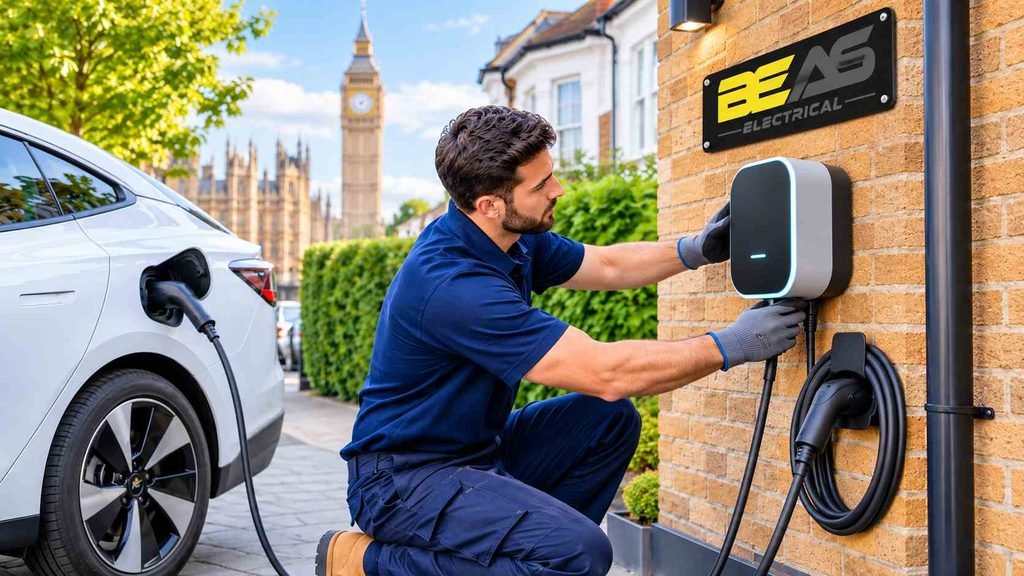
Switching to an electric vehicle makes home charging an important part of everyday convenience. Instead of relying entirely on public charging stations, homeowners can charge their vehicles at their own property and plan journeys with greater flexibility. Understanding home EV charger installation in London helps you know what to expect, from choosing suitable equipment to completing the electrical work safely. Whether you live in a house with a driveway or a flat with allocated parking, the installation process depends on your property, parking arrangements and existing electrical system.
What Is a Home EV Charger and How Does It Work?
A home electric vehicle (EV) charger is a dedicated charging unit installed at a residential property to supply electricity to an electric or plug-in hybrid vehicle. It connects to the property’s electrical supply and provides a controlled charging point, usually through a cable or charging socket.
Unlike a standard domestic socket, a dedicated chargepoint is designed specifically for vehicle charging. Many modern home chargers also include smart features that allow users to monitor energy consumption, schedule charging sessions and manage charging through a mobile application.
The suitability of a particular charger depends on the vehicle’s charging capabilities, the home’s electrical supply and the available installation location.
How Does Home EV Charger Installation Work?
A professional installation generally involves several stages. Each step helps ensure the charging equipment is suitable for the property and operates safely.
1. Initial Property Assessment
The first step is assessing the property and understanding the homeowner’s charging requirements. An electrician considers:
- The location of the parking space.
- The distance between the consumer unit and proposed charger position.
- The available electrical capacity.
- The condition of existing electrical equipment.
- Suitable cable routes and mounting surfaces.
- Any access or permission requirements.
For London properties, parking arrangements can make a difference. A house with a private driveway may have a straightforward installation, while a flat with shared or allocated parking may require additional permission and planning.
2. Choosing the Right EV Charging Unit
Once the property requirements are understood, the next step is selecting appropriate charging equipment.
Home chargepoints commonly include:
- 3.6kW chargers: Lower-power charging options for suitable installations.
- 7kW chargers: A common home charging option for compatible vehicles and electrical supplies.
- Smart EV chargers: Units with scheduling, monitoring and energy management features.
The right option depends on the vehicle, household electricity supply, charging habits and equipment compatibility. A qualified installer can help identify a suitable model rather than assuming that every charger works equally well for every property.
3. Checking the Existing Electrical System
Before installation, the electrician assesses the existing electrical installation to determine whether it can safely support the additional charging demand.
This may involve checking the consumer unit, protective devices, earthing arrangements, cable capacity and overall electrical condition.
If the existing installation requires improvements, these should be identified before the chargepoint is connected. For example, an outdated consumer unit or unsuitable electrical circuit may need attention.
You can also explore the electrical services available through BSAG Electrical Services page for information about electrical testing, consumer unit upgrades and specialist installations.
4. Planning the Charger Location and Cable Route
The installation position should make charging practical without creating unnecessary inconvenience.
An electrician considers the following factors:
- Convenient access to the vehicle’s charging port.
- Safe cable routing from the electrical supply.
- Protection against accidental damage.
- Suitable mounting height and surface.
- Exposure to weather and environmental conditions.
- Space for connecting and disconnecting the charging cable.
For properties with limited parking space, careful positioning is particularly important. The cable should reach the vehicle comfortably without creating a trip hazard or obstructing access.
5. Installing and Connecting the EV Charger
After the assessment and planning are complete, the installer prepares the mounting position and routes the required electrical cabling.
The chargepoint is securely mounted and connected to the appropriate electrical circuit. Protective equipment and earthing arrangements are installed or checked according to the applicable electrical requirements.
The installation must follow relevant technical standards, including BS 7671 and BS EN 61851, alongside applicable building regulations and manufacturer instructions.
6. Testing and Commissioning
Once the equipment has been installed, the electrician carries out the required inspection and testing.
This stage may include:
- Checking electrical connections.
- Testing protective devices.
- Verifying earthing arrangements.
- Checking the charger’s operation.
- Confirming communication and smart features where applicable.
- Providing relevant installation documentation.
The customer should receive the appropriate electrical certification and guidance on using the equipment.
Where required, the installer must also notify the relevant Distribution Network Operator (DNO) about the installation.
What Are the Requirements for Installing a Home EV Charger in London?
Before arranging an installation, homeowners should consider several practical and technical requirements.
Off-street parking: A private driveway or suitable parking space usually makes installation easier. Flats and properties with shared parking may require additional arrangements.
Permission: Tenants should obtain permission from their landlord. Flat owners may need approval from the freeholder, management company or other responsible party before installing equipment in shared areas.
Electrical capacity: The existing supply must be suitable for the proposed charger. Additional electrical work may be necessary depending on the property’s condition.
Qualified installation: Electrical work should be carried out by a suitably qualified and competent installer who understands the applicable standards and building regulations.
Chargepoint suitability: The selected equipment should be compatible with the vehicle and meet the relevant technical requirements.
For further guidance, homeowners can consult the UK government’s information on electric vehicle chargepoint specifications.
How Long Does Home EV Charger Installation Take?
A straightforward domestic installation may take a few hours, but the actual duration depends on the property’s electrical system and the complexity of the work.
Factors that can affect installation time include:
- Distance between the consumer unit and charger.
- Cable routing requirements.
- Electrical upgrades or additional protection.
- Wall drilling and mounting requirements.
- Access to the parking area.
- Additional permissions or network arrangements.
A property requiring minimal electrical work may have a simpler installation than one needing an upgraded consumer unit or a more complicated cable route. A site assessment provides a more reliable indication of the expected timeframe.
Why Choose a Professional EV Charger Installation?
A home charging point becomes part of the property’s electrical installation, so safety and correct configuration are essential.
Professional installation helps ensure that the equipment is suitable, electrical connections are properly tested and relevant regulations are followed. It also helps identify potential issues before they affect the charging system.
BSAG Electrical provides electrical services across London, including specialist electrical installations, EV charging installations and electrical testing.
Visit the BSAG Electrical Services page to learn more about its electrical solutions, or explore the BSAG Electrical to find out more about the company.
Arrange Your Home EV Charger Installation
Installing a home charging point can make owning an electric vehicle more convenient, provided the equipment and electrical system are suitable for the property. From the initial assessment and charger selection to installation and final testing, each stage plays an important role in achieving a safe and reliable charging setup.
If you are considering home EV charger installation in London, contact BSAG Electrical to discuss your property requirements and explore suitable electrical installation options.
Frequently Asked Questions
Do I need a qualified electrician to install a home EV charger?
Yes. A suitably qualified and competent electrician should assess and install the charging equipment in accordance with applicable electrical standards and building regulations.
Can I install an EV charger if I live in a flat?
Yes, it may be possible, but the installation can require permission from the landlord, freeholder or property management company. Parking arrangements and cable routing must also be considered.
Is a 7kW EV charger suitable for every home?
No. A 7kW charger is a common domestic option, but suitability depends on the property's electrical supply, vehicle compatibility and installation requirements.
Does a home EV charger need regular maintenance?
The chargepoint should be kept in good condition and checked according to the manufacturer's recommendations. Any visible damage, unusual operation or electrical concerns should be assessed by a competent professional.
Pingback: What Happens During an Electrical EICR Inspection?
Pingback: 7 Warning Signs Your Electrical Consumer Unit Needs Replacing
Pingback: How Can LED Lighting Improve Energy Efficiency in UK Homes?
Pingback: What Should You Know Before Planning a House Rewire in the UK?
Pingback: Single-Phase vs Three-Phase Electricity in the UK: Which Do You Need?