
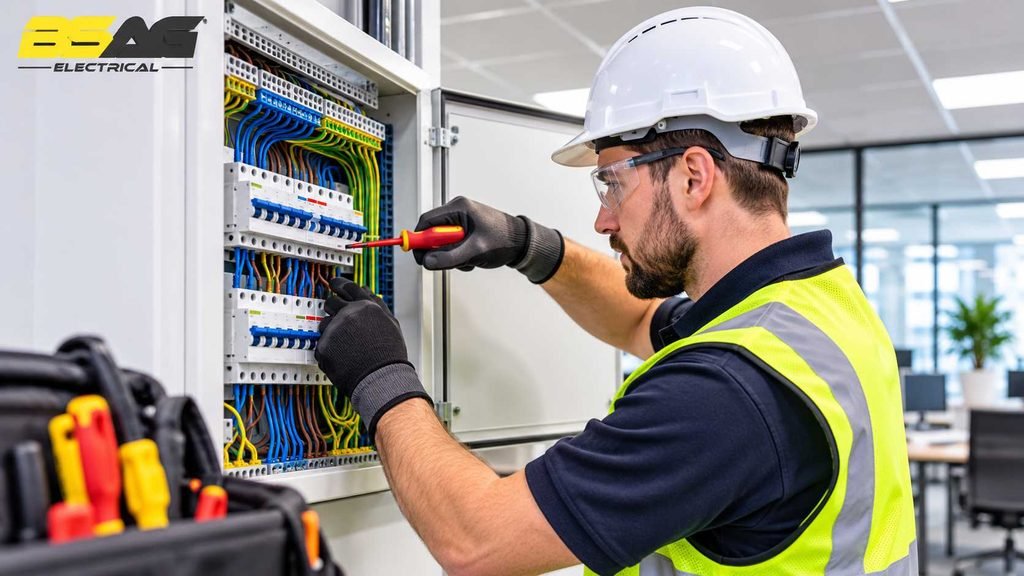
Electrical systems are essential to the daily operation of businesses across the UK, from offices, shops and restaurants to warehouses, workshops and commercial buildings. Faulty wiring, overloaded circuits, damaged equipment or poorly maintained electrical installations can create safety risks, disrupt operations and lead to unexpected repair work. Understanding why regular electrical maintenance is important for UK businesses can help business owners protect employees, customers, property and day-to-day operations.
Regular electrical maintenance involves inspecting, testing, identifying faults and carrying out necessary repairs to keep electrical systems safe and reliable. Rather than waiting for equipment to fail, businesses can take a proactive approach to managing electrical risks and reducing avoidable disruption.
If you operate a commercial property and need electrical assistance, explore the electrical services available from BSAG Electrical to find out more about the work that may be required.
What Is Electrical Maintenance for Businesses?
Electrical maintenance for businesses involves the inspection, testing, servicing, repair and upkeep of electrical installations and equipment within commercial premises.
The purpose is to identify potential problems, maintain electrical safety and ensure systems remain suitable for their intended use.
Commercial electrical maintenance may include:
- Inspecting electrical distribution boards and consumer units.
- Checking sockets, switches and electrical connections.
- Inspecting cables for visible damage or deterioration.
- Identifying overheating or unusual electrical activity.
- Testing relevant electrical installations and equipment.
- Maintaining commercial lighting and emergency lighting systems.
- Investigating electrical faults and repeated circuit tripping.
- Carrying out necessary repairs and remedial work.
The maintenance requirements depend on the type of business, the electrical equipment being used, the property’s condition and the environment in which the electrical systems operate.
7 Reasons Regular Electrical Maintenance Is Important for UK Businesses
1. Helps Protect Employees, Customers and Visitors
Electrical faults can create serious hazards in commercial environments. Damaged cables, faulty sockets, exposed conductors, overheating equipment and defective electrical components may increase the risk of electric shock, burns or fire.
Regular inspections and maintenance help businesses identify potential problems before they create more serious risks.
For example, a damaged cable in an office, a faulty socket in a retail shop or an electrical defect in a warehouse may present a hazard to employees and other people using the premises.
Businesses should ensure electrical installations and equipment are maintained by competent people and that identified safety issues are addressed appropriately.
2. Reduces the Risk of Electrical Fires
Electrical faults can be a source of fire in commercial premises. Overloaded circuits, damaged insulation, loose connections, overheating equipment and unsuitable electrical installations may create dangerous conditions.
Electrical maintenance helps identify warning signs such as:
- Scorch marks around sockets or switches.
- Burning smells near electrical equipment.
- Unusual buzzing or crackling sounds.
- Frequently tripping circuit breakers.
- Damaged electrical cables.
- Excessive heat around electrical components.
These warning signs should not be ignored. If a business identifies a potentially dangerous electrical fault, the affected equipment or circuit should be made safe by a competent person and appropriate action taken urgently.
Preventive maintenance can help businesses identify electrical problems and reduce the risk of faults developing into more serious incidents.
3. Helps Prevent Unexpected Business Downtime
Electrical faults can interrupt business operations. A problem with a distribution board, lighting circuit, electrical equipment or power supply may affect employees, customers and essential business activities.
For example:
- Offices may lose access to computers and communication systems.
- Shops may experience interruptions to lighting, tills or equipment.
- Restaurants may be affected by electrical faults involving kitchen equipment.
- Warehouses may experience disruption to machinery or operational systems.
- Businesses may need to temporarily close affected areas.
Planned electrical maintenance helps identify potential problems before they cause unexpected interruptions.
Although maintenance cannot prevent every electrical failure, identifying deteriorating components and resolving known faults can help reduce avoidable disruption.
4. Supports Workplace Electrical Safety and Legal Responsibilities
Businesses in the UK have responsibilities under applicable health and safety legislation to protect employees and others from risks associated with electrical systems and equipment.
The Electricity at Work Regulations 1989 require electrical systems to be maintained, so far as is reasonably practicable, to prevent danger. Employers and other dutyholders should ensure electrical equipment and installations are suitable, safe and maintained by competent people.
Regular maintenance can help businesses manage these responsibilities by:
- Identifying electrical hazards.
- Ensuring defective equipment is dealt with.
- Arranging appropriate inspection and testing.
- Keeping relevant maintenance and inspection records.
- Ensuring repairs are prioritised according to risk.
- Using competent electrical contractors for specialist work.
Maintenance intervals should be determined according to the type of equipment, its condition, usage, environment, risk assessment and relevant guidance rather than assuming every electrical item requires the same testing schedule.
5. Helps Reduce Unexpected Repair Expenses
Electrical problems can become more complicated when warning signs are ignored. A damaged connection, deteriorating cable or defective electrical component may eventually lead to equipment failure or more extensive remedial work.
Regular maintenance can help businesses identify issues earlier, allowing them to plan repairs rather than dealing with unexpected electrical emergencies.
Planned maintenance may also help businesses:
- Identify deteriorating components.
- Prioritise repairs according to risk.
- Plan electrical work around operating hours.
- Reduce avoidable emergency call-outs.
- Budget for future electrical improvements.
The purpose is not to eliminate every repair cost, but to help businesses manage electrical issues in a more organised and predictable way.
6. Improves Reliability of Electrical Equipment
Electrical systems and equipment are used throughout commercial premises. Their condition can affect how reliably a business operates.
Regular maintenance helps identify faults, damaged components, loose connections and other issues that may affect electrical performance.
Depending on the business and its equipment, maintenance may involve checking:
- Electrical distribution boards.
- Fixed wiring and circuits.
- Lighting systems.
- Sockets and switches.
- Commercial electrical equipment.
- Electrical connections.
- Emergency lighting.
- Electrical isolation and protective devices.
A properly maintained electrical installation is less likely to develop unnoticed defects that could affect the safe operation of a business.
7. Helps Businesses Plan Future Electrical Upgrades
Business electrical requirements can change over time. New machinery, additional office equipment, building extensions, lighting upgrades and electric vehicle charging installations may increase electrical demand.
Regular electrical assessments can help businesses understand the condition of their existing installation and identify areas that may need improvement.
For example, businesses may need to consider:
- Additional electrical circuits.
- Consumer unit or distribution board upgrades.
- LED lighting improvements.
- New machinery connections.
- EV charging installation.
- Improved electrical capacity.
- Electrical upgrades during renovation work.
Planning electrical improvements in advance can help businesses coordinate work, reduce unnecessary disruption and prepare for future requirements.
What Does Commercial Electrical Maintenance Include?
The exact scope of electrical maintenance depends on the business premises, equipment, electrical installation and maintenance requirements.
Electrical Installation Inspection and Testing
Periodic inspection and testing can help assess the condition of fixed electrical installations, including wiring, protective devices, distribution boards, sockets and other electrical components.
An Electrical Installation Condition Report (EICR) may identify defects or areas requiring further investigation or remedial work.
Electrical Fault Finding and Repairs
Fault finding involves investigating electrical problems such as circuit tripping, power interruptions, defective sockets, lighting failures and other electrical issues.
The cause of a fault should be identified before repairs are completed, rather than repeatedly resetting protective devices without investigating.
Lighting Maintenance
Commercial lighting is important for visibility, workplace operations and the safe movement of people around premises.
Maintenance may include inspecting light fittings, replacing defective components, checking lighting controls and maintaining emergency lighting where applicable.
Distribution Board and Consumer Unit Maintenance
Electrical distribution boards supply power to circuits throughout commercial premises.
Maintenance may include checking the condition of the equipment, identifying signs of overheating or damage, assessing protective devices and investigating electrical faults.
Any work involving electrical distribution equipment should be undertaken by competent electrical professionals using appropriate safe working procedures.
Electrical Equipment Inspection
Businesses may use a wide range of electrical equipment, including computers, machinery, kitchen equipment, portable tools and other appliances.
The inspection and maintenance requirements should be appropriate to the equipment, its usage, working environment and risk. Portable appliance testing may be part of a suitable maintenance programme where justified by risk assessment, but it is not a universal annual legal requirement for every electrical appliance.
How Often Should UK Businesses Arrange Electrical Maintenance?
There is no single maintenance schedule that applies to every business. The appropriate frequency depends on the type of premises, electrical equipment, installation condition, environmental conditions, usage and relevant risk assessments.
Businesses should consider:
- The age and condition of the electrical installation.
- How frequently equipment is used.
- Whether equipment operates in demanding environments.
- The manufacturer’s maintenance recommendations.
- Previous inspection and testing results.
- Any electrical defects identified.
- The type of business and its operational requirements.
For example, an office with ordinary electrical equipment may have different maintenance needs from a commercial kitchen, workshop, warehouse or industrial environment.
Periodic fixed-installation inspection intervals should be determined by a competent person, with the recommended next inspection date documented where applicable. Routine checks and maintenance may also be needed between formal inspections.
Warning Signs Your Business May Need Electrical Maintenance
Businesses should arrange an electrical assessment if they notice any of the following:
- Circuit breakers repeatedly trip.
- Lights flicker unexpectedly.
- Sockets or switches become unusually warm.
- Burning smells come from electrical equipment.
- Electrical cables show visible damage.
- Equipment makes unusual buzzing or crackling sounds.
- Electrical power interruptions occur frequently.
- Distribution boards show visible damage.
- Employees report electrical concerns.
Burning smells, smoke, sparking, exposed live parts or other immediate danger should be treated urgently. Do not attempt to investigate or repair electrical equipment yourself unless you are competent and authorised to do so.
Why Professional Electrical Maintenance Matters in London
Businesses across London operate in a wide range of commercial environments, including offices, retail shops, restaurants, workshops, warehouses and mixed-use properties.
Each premises may have different electrical requirements based on its equipment, operating hours, building layout and usage.
A professional electrical assessment can help business owners identify potential issues, understand maintenance requirements and arrange suitable electrical work before problems affect operations.
Whether you are managing an office, retail premises or commercial property, keeping electrical systems in suitable condition is an important part of workplace safety and business continuity.
You can explore the electrical services provided by BSAG Electrical or view examples of work in the BSAG Electrical gallery.
Frequently Asked Questions
How often should a business have its electrical systems inspected?
Inspection intervals depend on the installation, business environment, usage, condition and risk assessment. A competent person should recommend an appropriate interval for the fixed electrical installation and identify any additional routine checks or maintenance required.
Is electrical maintenance a legal requirement for UK businesses?
UK workplace legislation requires electrical systems to be maintained, so far as is reasonably practicable, to prevent danger. Businesses must ensure electrical systems and equipment are safe and that maintenance is carried out by competent people where required.
What is included in commercial electrical maintenance?
Commercial electrical maintenance may include inspection and testing of fixed installations, fault finding, repairs, distribution board checks, lighting maintenance, electrical equipment inspection and remedial work.
Can electrical maintenance prevent business downtime?
Regular maintenance can help identify potential electrical problems before they cause operational interruptions. Although it cannot prevent every failure, addressing defects early can reduce the risk of avoidable downtime.
Does every business need annual PAT testing?
No. UK legislation does not require every electrical appliance to undergo PAT testing every year. The inspection and testing regime should be based on risk, equipment type, usage, environment and other relevant considerations.