
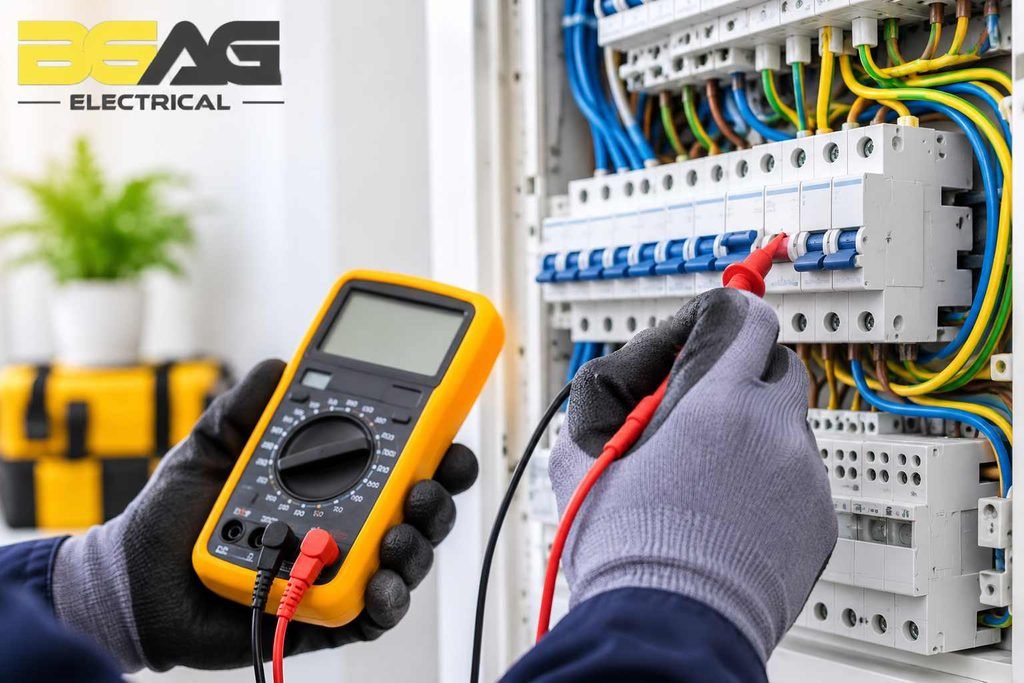
If you have recently received an Electrical Installation Condition Report (EICR), you may have noticed codes such as C1, C2, C3 or FI in the observations section. These codes explain the seriousness of electrical problems found during an inspection and indicate whether immediate action, urgent repairs, improvements or further investigation are recommended.
Understanding EICR codes C1, C2, C3 and FI helps homeowners, landlords and tenants understand the condition of a property’s electrical installation and what steps may be necessary to maintain safety.
An EICR is a professional assessment of the fixed electrical installation, including wiring, sockets, switches, lighting circuits and the consumer unit. In this guide, BS AG Electrical explains what each classification means, how it affects your report and what you should do if an issue is identified.
What Are EICR Classification Codes?
EICR classification codes are used by qualified electrical inspectors to record defects or concerns identified during an electrical inspection and testing process.
Each observation receives an appropriate classification based on its seriousness and the action recommended.
The four standard codes are:
| EICR Code | Meaning | Recommended Action |
| C1 | Danger present | Immediate remedial action |
| C2 | Potentially dangerous | Urgent remedial action |
| C3 | Improvement recommended | Consider improving the installation |
| FI | Further investigation advised | Arrange additional investigation |
The classification helps property owners understand which findings require priority attention. However, the written observation is equally important because it explains the specific electrical issue and its location.
What Does EICR Code C1 Mean?
C1 means Danger Present. It is the most serious classification and indicates that someone using the electrical installation may be at immediate risk of injury.
When an inspector identifies a C1 issue, immediate remedial action is necessary to remove the danger. Where possible and authorised, the electrician may make the affected part of the installation safe before leaving the property.
Examples of conditions that may receive a C1 classification include:
- Exposed live electrical conductors that can be touched.
- Damaged electrical equipment exposing dangerous live parts.
- Electrical components that present an immediate risk of electric shock.
- A metal fitting that has become live due to an electrical fault.
These are examples only. The correct classification depends on the actual condition, inspection findings and relevant electrical requirements.
What should you do if your EICR contains C1?
Do not ignore a C1 observation or continue using affected equipment. Follow the electrician’s safety instructions and arrange immediate remedial work through a qualified electrician.
What Does EICR Code C2 Mean?
C2 means Potentially Dangerous. This classification identifies an electrical issue that may not present an immediate danger at the time of inspection but could become dangerous under foreseeable circumstances.
C2 observations require urgent remedial action to reduce the risk and bring the affected installation into a safe condition.
Examples may include:
- Missing or inadequate earthing arrangements.
- Inadequate protective bonding where required.
- Electrical equipment with a significant safety defect.
- Inadequate protection against electric shock.
- Certain damaged or incorrectly installed electrical components.
The electrician must assess the circumstances before assigning a classification. Not every outdated or damaged component automatically receives a C2 code.
What should you do if your EICR contains C2?
Arrange urgent repairs with a qualified electrician. Ask for an explanation of the observation, the affected circuit or equipment and the recommended corrective work.
A C2 finding results in an unsatisfactory EICR outcome.
What Does EICR Code C3 Mean?
C3 means Improvement Recommended. It identifies an area where an electrical installation could be improved, even though the observation is not considered dangerous or potentially dangerous under the assessment.
A C3 code does not automatically mean that the installation is unsafe or that the EICR has failed.
Examples of possible C3 observations include:
- Older electrical accessories that could benefit from upgrading.
- Improvements to labelling or identification of electrical circuits.
- Certain older installations that could be improved to enhance safety.
- Additional protective measures that would improve the installation.
The actual classification depends on the installation, the relevant requirements and the inspector’s professional assessment.
Do you have to fix C3 observations?
A C3 recommendation does not normally require remedial work for the EICR to be satisfactory. However, considering the recommended improvements can help maintain and enhance electrical safety.
For property owners and landlords, discussing these recommendations with a qualified electrician can help with future maintenance planning.
What Does EICR Code FI Mean?
FI means Further Investigation Advised. It is used when an inspector identifies a concern that requires additional investigation before its full nature or significance can be established.
Sometimes the agreed inspection scope or available testing does not provide enough information to reach a clear conclusion about an electrical issue.
Examples may include:
- An unexplained test result that needs additional investigation.
- A suspected electrical defect that cannot be fully assessed during the initial inspection.
- An issue where further testing is needed to establish whether a safety concern exists.
FI does not mean that a specific component must automatically be replaced. Further investigation is needed to understand the problem and determine whether remedial work is necessary.
What should you do if your EICR contains FI?
Contact the inspecting electrician and ask what additional investigation is required. Arrange the recommended investigation without unnecessary delay, particularly where a potential safety concern has been identified.
Important: Has the FI Code Changed in 2026?
Yes. BS 7671:2018+A4:2026 introduced an important change to how FI observations affect the overall EICR assessment.
Under the updated A4:2026 model report form, C1 and C2 observations affect the overall assessment, while C3 and FI observations are listed separately as advisory items that do not affect the overall assessment by themselves.
Older EICR forms and guidance may treat FI differently. Therefore, it is important to check which version of the reporting form has been used.
An FI observation should still be taken seriously. For rented properties in England, the electrical safety regulations require landlords to arrange necessary further investigative or remedial work within 28 days, or within a shorter period if specified in the report.
Which EICR Codes Mean an Unsatisfactory Report?
The overall result depends on the observations and the version of the EICR reporting form being used.
Under the updated BS 7671:2018+A4:2026 model form:
- C1: Makes the report unsatisfactory.
- C2: Makes the report unsatisfactory.
- C3: Does not make the report unsatisfactory by itself.
- FI: Does not make the report unsatisfactory by itself.
This is an important distinction for property owners and landlords reading reports issued under different versions of the wiring regulations.
An EICR containing only C3 observations can still receive a satisfactory outcome. Similarly, an FI observation on the updated A4 form does not automatically make the report unsatisfactory, although the recommended investigation should still be arranged.
What Happens After an Unsatisfactory EICR?
If an EICR identifies C1 or C2 observations, the affected electrical issues need to be addressed by a qualified electrician.
The process generally involves:
- Reviewing the report: Read each observation carefully to understand the electrical issue.
- Prioritising safety: Follow any immediate safety instructions provided by the inspector.
- Arranging remedial work: Have the identified defects assessed and corrected by a qualified electrician.
- Completing further investigations: If an FI observation is recorded, arrange the additional checks advised.
- Obtaining written confirmation: Request appropriate documentation confirming the work completed and its outcome.
For privately rented properties in England, landlords must ensure required remedial or further investigative work is completed within 28 days, or any shorter period specified in the report. They must also obtain written confirmation of the work and provide the required documentation to the tenant and local council.
Why Is an EICR Important for Homeowners and Landlords?
Electrical installations can deteriorate over time due to ageing components, wear and tear, damage or previous alterations. An EICR helps identify defects and assess whether the installation is suitable for continued use.
For homeowners, an inspection can provide a clearer understanding of the electrical condition of their property.
For landlords in England, electrical safety regulations generally require rented properties to have their electrical installations inspected and tested by a qualified person at least every five years.
An EICR can also help identify issues before they develop into more serious electrical safety concerns.
If you need professional electrical assistance, explore the electrical services offered by BS AG Electrical.
You can also visit our gallery to see examples of electrical work.
Arrange Professional Electrical Assistance with BS AG Electrical
Understanding your EICR results is an important part of maintaining a safe electrical installation. Whether your report contains C1, C2, C3 or FI observations, knowing what each code means can help you decide on the appropriate next step.
BS AG Electrical provides electrical services to help property owners address electrical installation concerns and maintain safer properties.
If you need assistance with electrical inspection findings or remedial work contact BS AG Electrical to discuss your requirements.
Always have electrical faults assessed and repaired by a suitably qualified electrician.
Frequently Asked Questions
Does a C2 code mean an EICR has failed?
Yes. A C2 observation indicates a potentially dangerous condition and results in an unsatisfactory EICR outcome. Urgent remedial action is required.
Can an EICR pass with C3 codes?
Yes. C3 means improvement is recommended. A report containing only C3 observations can still be satisfactory because the code does not identify an immediate or potential danger.
Does an FI code automatically fail an EICR?
Under the updated BS 7671:2018+A4:2026 model form, FI does not affect the overall assessment by itself. Older report forms may treat FI differently. However, further investigation should still be arranged.
How long does a landlord have to fix EICR problems in England?
Where an EICR identifies necessary remedial or further investigative work, landlords generally have 28 days to complete it, or a shorter period if specified in the report. They must also obtain written confirmation of the work.
Can I ignore a C3 recommendation?
A C3 code does not normally require mandatory remedial work for the report to be satisfactory. However, considering the recommendation may help improve the electrical installation and its long-term safety.