
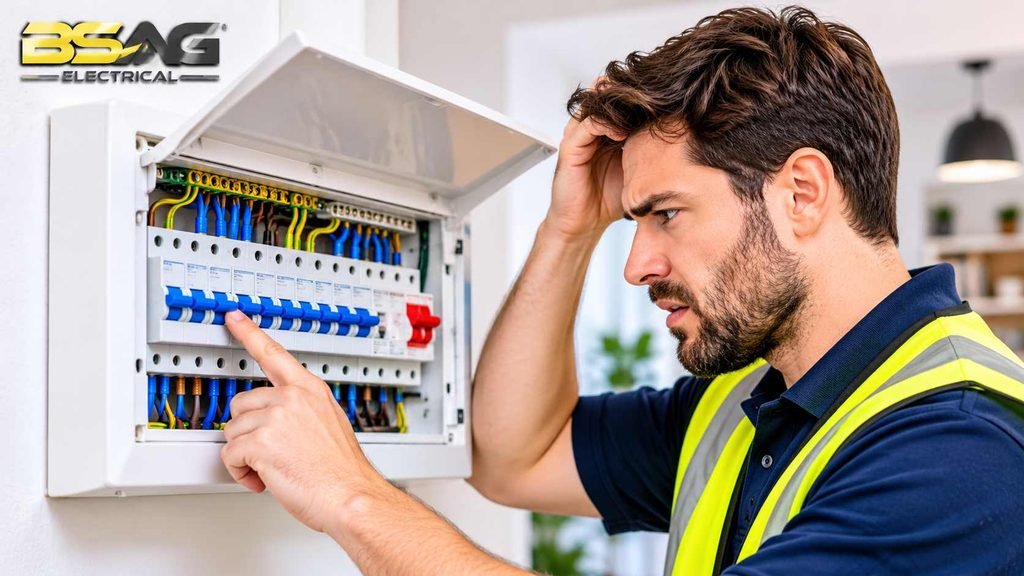
If your electrical circuit breaker keeps tripping, it usually means your electrical system has detected a problem and automatically switched off the power to protect your home. Although an occasional trip may be caused by an overloaded circuit or a faulty appliance, repeated tripping can indicate a more serious electrical issue.
Understanding why an electrical circuit breaker keeps tripping can help you recognise potential warning signs and know when to contact a qualified electrician. In London homes, common causes include overloaded circuits, short circuits, damaged wiring, faulty appliances and earth leakage.
In this guide, we explain the most common reasons circuit breakers trip, what you can safely check and when professional electrical assistance is necessary.
What Is an Electrical Circuit Breaker?
An electrical circuit breaker is a protective device installed inside your consumer unit (also known as a fuse box). Its main purpose is to interrupt the electrical supply when it detects an unsafe condition, such as excessive current or an electrical fault.
Unlike traditional fuses, which need replacing after they operate, most modern circuit breakers can be reset once the underlying problem has been identified and resolved.
Different protective devices perform different functions:
- MCB (Miniature Circuit Breaker): Protects an individual circuit against overloads and short circuits.
- RCD (Residual Current Device): Detects an imbalance in electrical current, which can indicate electricity leaking to earth.
- RCBO (Residual Current Breaker with Overcurrent Protection): Combines residual current and overcurrent protection in one device.
Knowing which device has tripped can help an electrician narrow down the possible cause.
7 Common Reasons Why Your Circuit Breaker Keeps Tripping
Several electrical problems can cause a circuit breaker to switch off repeatedly. Here are seven common reasons homeowners should understand.
1. Overloaded Electrical Circuits
An overloaded circuit is one of the most common reasons a circuit breaker trips.
This happens when too many electrical appliances draw power from the same circuit at the same time. When the electrical demand exceeds the circuit’s safe capacity, the MCB may disconnect the supply.
For example, using several high-power kitchen appliances simultaneously could overload a shared circuit.
Common signs of an overloaded circuit include:
- The breaker trips when several appliances are running.
- Power switches off during periods of heavy electricity use.
- The circuit works normally when fewer appliances are connected.
Avoid connecting too many high-power appliances to one circuit. If the problem continues, ask a qualified electrician to assess the circuit capacity and electrical installation.
2. A Faulty Electrical Appliance
Sometimes, the problem is not with the wiring but with an individual electrical appliance.
A damaged washing machine, dishwasher, kettle, microwave or other electrical equipment can cause a protective device to trip.
Possible warning signs include:
- The breaker trips when a particular appliance is switched on.
- An appliance stops working unexpectedly.
- You notice unusual noises, burning smells or visible damage.
- The electrical supply switches off during an appliance’s operating cycle.
If you suspect an appliance is faulty, stop using it and disconnect it only if this can be done safely. Do not continue testing equipment that shows signs of damage.
3. A Short Circuit
A short circuit occurs when electrical conductors come into contact in a way that creates an unintended path for current.
This can cause a sudden increase in current, triggering the circuit breaker’s protective mechanism.
Common causes include:
- Damaged electrical cables.
- Faulty plugs or sockets.
- Deteriorated appliance wiring.
- Accidental cable damage during drilling or building work.
- Loose or damaged electrical connections.
A short circuit may cause the breaker to trip immediately when power is switched on.
Never attempt to locate or repair a short circuit by opening electrical fittings or handling exposed wires. A qualified electrician should identify the fault and carry out the necessary repairs.
4. Earth Leakage or Moisture Problems
Earth leakage happens when electrical current escapes from its intended path and flows towards earth.
An RCD is designed to detect this type of current imbalance and disconnect the supply to reduce the risk of electric shock.
Moisture can contribute to earth leakage, particularly around:
- Outdoor sockets and electrical fittings.
- Bathroom electrical equipment.
- Garden lighting.
- Damaged cables exposed to water.
- Appliances affected by internal moisture.
If your RCD trips after heavy rain or when a particular appliance is operating, moisture or an insulation fault could be involved.
Do not touch wet electrical equipment or attempt to dry electrical components while they are connected to the power supply. Arrange a professional inspection.
5. Damaged or Deteriorating Electrical Wiring
Electrical wiring can deteriorate over time due to age, physical damage, overheating, poor installation or environmental conditions.
Damaged insulation and loose connections may create electrical faults that cause protective devices to operate.
Look out for warning signs such as:
- Frequent circuit breaker trips.
- Flickering or inconsistent lighting.
- Burning smells near sockets or switches.
- Buzzing sounds from electrical fittings.
- Scorch marks or discolouration.
These symptoms should never be ignored. Damaged wiring can create a risk of electric shock or fire.
If you notice these warning signs, stop using the affected circuit and arrange an inspection by a qualified electrician.
6. A Faulty Circuit Breaker
Although circuit breakers are designed to provide reliable protection, they can develop faults or deteriorate over time.
A faulty breaker may trip unexpectedly, fail to reset or operate inconsistently.
However, repeated tripping does not automatically mean the breaker itself needs replacing. The cause could be an overload, wiring problem or faulty appliance.
An electrician can test the protective device, check the connected circuit and determine whether replacement is necessary.
7. Too Many Electrical Devices Causing Cumulative Leakage
Sometimes, several electrical appliances contribute small amounts of normal leakage current. Individually, these amounts may not cause a problem, but their combined effect can cause an RCD to trip.
This is sometimes called cumulative earth leakage.
It can occur in installations where multiple appliances and electronic devices are connected to circuits protected by the same RCD.
An electrician can investigate the source, measure leakage current and assess whether the existing circuit arrangement and protective devices are suitable.
What Should You Do When Your Circuit Breaker Keeps Tripping?
If a circuit breaker trips, avoid repeatedly switching it back on without understanding the cause.
You can take a few basic precautions without opening the consumer unit or touching electrical wiring:
- Identify what happened: Note which appliances were being used when the power went off.
- Look for visible warning signs: Check for burning smells, scorch marks, damaged plugs or signs of water around electrical equipment.
- Stop using suspicious appliances: If a particular appliance appears to trigger the problem, stop using it.
- Avoid repeated resets: If the breaker trips again, leave the affected circuit switched off.
- Contact an electrician: Arrange professional testing if the cause is unclear or the problem continues.
Never remove the consumer unit cover, handle exposed wires or attempt electrical repairs yourself.
If you notice smoke, sparks or signs of an electrical fire, keep away from the affected equipment, leave the property if necessary and call 999. Do not use water on an electrical fire.
When Should You Call a Qualified Electrician?
Occasional electrical interruptions can happen, but repeated circuit breaker tripping should always be investigated.
You should arrange professional electrical assistance if:
- Your breaker trips repeatedly.
- The circuit will not stay switched on.
- The RCD keeps disconnecting the electricity supply.
- You notice burning smells or scorch marks.
- Sockets or switches become unusually warm.
- You suspect damaged wiring or moisture inside electrical fittings.
- The problem started after renovation or building work.
A qualified electrician can carry out appropriate tests to identify the fault and recommend a suitable repair.
If you are experiencing electrical problems at home or at a business property, explore our electrical services in London to find out more about the services available.
How Can an Electrician Diagnose a Circuit Breaker That Keeps Tripping?
Finding the actual cause requires more than simply replacing the breaker.
Depending on the symptoms, an electrician may:
- Inspect the consumer unit and protective devices.
- Identify which circuit is causing the problem.
- Check connected electrical equipment.
- Test the condition and insulation resistance of wiring.
- Investigate earth leakage and possible short circuits.
- Assess whether the protective devices are correctly selected for the installation.
- Recommend appropriate repairs or replacements.
The exact testing process depends on the type of fault and the electrical installation.
For more information about the electrical work carried out by the team, visit the BS AG Electrical Gallery.
Can an EICR Help Identify Repeated Electrical Problems?
An Electrical Installation Condition Report (EICR) is a formal assessment of the condition of a property’s fixed electrical installation.
It can help identify issues such as deteriorating wiring, damaged electrical components, inadequate earthing and bonding, and problems with protective devices.
An EICR may be particularly useful when a property experiences recurring electrical problems or when the condition of its wiring is uncertain.
However, an EICR is not a substitute for investigating an active fault. If a breaker is repeatedly tripping, arrange an appropriate fault investigation rather than waiting for a routine inspection.
You can learn more about electrical inspections and other available services through the BS AG Electrical website.
Get Professional Help With Repeated Circuit Breaker Problems
A circuit breaker that keeps tripping is a warning that your electrical system needs attention. Whether the cause is an overloaded circuit, faulty appliance, damaged wiring or earth leakage, identifying the problem is essential for maintaining electrical safety.
Avoid repeatedly resetting the breaker or attempting repairs yourself. A professional electrical inspection can help identify the fault and determine the appropriate solution.
If you need help with electrical problems at your property, visit BS AG Electrical to explore the available services and get in touch with the team.
Understanding Why Does an Electrical Circuit Breaker Keep Tripping? is the first step towards recognising electrical warning signs and knowing when to seek professional assistance.
Frequently Asked Questions
Is it dangerous if my circuit breaker keeps tripping?
Repeated tripping can indicate an electrical fault that needs attention. Although the breaker is designed to provide protection, the underlying problem may create a risk of electric shock or fire. Leave the affected circuit switched off if it continues to trip and seek professional assistance.
Can a faulty appliance cause a circuit breaker to trip?
Yes. A faulty appliance can draw excessive current, develop an internal short circuit or allow current to leak to earth. If the problem happens whenever a particular appliance is used, stop using it and arrange an appropriate inspection or repair.
What is the difference between an MCB and an RCD?
An MCB protects a circuit against excessive current caused by overloads and short circuits. An RCD detects an imbalance in electrical current that may indicate earth leakage. An RCBO combines both types of protection.
Should I keep resetting a circuit breaker that trips?
No. Repeatedly resetting a breaker without identifying the cause is not a safe solution. If it trips again, leave it off and contact a qualified electrician.
Can old wiring cause circuit breakers to trip?
Yes. Deteriorating insulation, damaged cables and loose connections can contribute to electrical faults. However, the age of wiring alone does not confirm that it is faulty. Appropriate electrical testing is needed to assess its condition.