
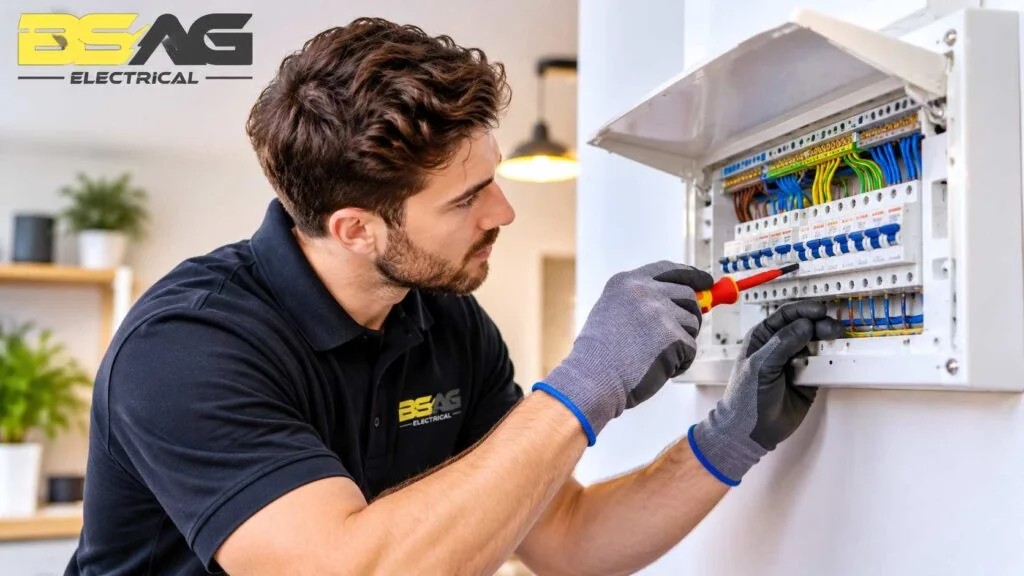
Your electrical consumer unit plays an essential role in protecting your property from electrical faults, overloads and other potential hazards. However, if it becomes damaged, outdated or unsuitable for your household’s electrical demands, it may no longer provide the level of protection your installation needs. Recognising the warning signs your electrical consumer unit needs replacing can help you identify potential problems and arrange a professional inspection before they become more serious.
Whether you live in an older London property or a modern home with increasing electrical demands, understanding how your consumer unit works is an important part of maintaining electrical safety. In this guide, we explain seven signs that your fuse board may need professional attention, when replacement might be recommended and why an electrical assessment is important.
For an overview of the electrical work available, visit our Electrical services page. You can also explore the BSAG Electrical to learn more about our electrical services.
What Is an Electrical Consumer Unit?
An electrical consumer unit, commonly called a fuse box or fuse board, distributes electricity throughout your property. It contains protective devices designed to disconnect electrical circuits when certain faults occur, helping reduce the risk of electric shock, overheating and electrical fires.
Modern consumer units commonly include:
- Main switch: Allows the electrical supply to the installation to be isolated.
- Miniature Circuit Breakers (MCBs): Disconnect circuits when an overload or short circuit occurs.
- Residual Current Devices (RCDs): Provide additional protection by disconnecting the supply when they detect certain electrical leakage faults.
- Residual Current Breakers with Overcurrent Protection (RCBOs): Combine residual-current and overcurrent protection for individual circuits.
- Surge Protective Devices (SPDs): Help protect electrical equipment against certain voltage surges.
The exact protective devices required depend on the property’s electrical installation and applicable wiring requirements.
7 Warning Signs Your Electrical Consumer Unit Needs Replacing
Not every electrical issue means the entire consumer unit must be replaced. However, certain warning signs indicate that the installation should be checked by a qualified electrician. Here are seven issues worth taking seriously.
1. Your Property Still Has an Old Rewireable Fuse Box
One of the most noticeable signs is an older fuse box containing rewireable fuses. These units use fuse wire that melts when excessive current passes through a circuit. Although older protective devices may still provide overcurrent protection, they generally lack some of the additional safety features available in modern consumer units.
Older installations may also have limited circuit protection and fewer options for supporting modern electrical equipment.
If your property still uses an older fuse box, arrange an inspection to establish whether it provides suitable protection for the installation. An electrician can assess its condition and explain whether an upgrade is recommended.
2. You Notice a Burning Smell or Scorch Marks
A burning smell around your consumer unit should never be ignored. Discolouration, melted plastic, scorch marks or visible signs of overheating can indicate a loose connection, damaged component or another electrical fault.
These symptoms may increase the risk of an electrical fire if the underlying problem is not addressed.
If you notice smoke, burning smells or signs of overheating, keep away from the unit. Do not remove its cover or attempt repairs. If it is safe to do so, isolate the electrical supply and contact a qualified electrician urgently. If there is an active fire or immediate danger, leave the property and call emergency services.
3. Circuit Breakers or RCDs Keep Tripping
Circuit breakers and RCDs are designed to disconnect electricity when they detect certain faults. Occasional tripping can happen because of a faulty appliance or a temporary electrical problem.
However, repeated tripping should be investigated rather than treated as a normal occurrence.
Possible causes include:
- Faulty electrical appliances.
- Damaged or deteriorating wiring.
- Overloaded electrical circuits.
- Earth leakage faults.
- Faulty protective devices.
A consumer unit replacement may be recommended if the existing equipment is defective or unsuitable, but the electrician must first identify the actual cause.
Avoid repeatedly resetting a breaker or RCD without investigating why it keeps operating.
4. Your Consumer Unit Has Visible Damage or Deterioration
Physical damage is another important warning sign. A cracked enclosure, loose components, corrosion, water damage or gaps that could allow access to live parts may compromise the safety of the installation.
Moisture can also damage electrical connections and protective devices, potentially creating dangerous conditions.
Never open the consumer unit to investigate internal damage yourself. A qualified electrician should inspect the equipment, identify any defects and determine whether repairs or complete replacement are necessary.
5. Your Consumer Unit Does Not Have Suitable RCD Protection
RCD protection is an important safety feature because it helps protect people against electric shock by disconnecting the electrical supply when certain leakage faults are detected.
Some older consumer units may not contain RCDs or may have limited protection compared with modern arrangements.
If your fuse board has no visible test button marked T or Test, it may be worth arranging a professional assessment. However, the absence of an RCD does not automatically mean the entire consumer unit must be replaced. An electrician can assess the installation and identify an appropriate way to provide the required protection.
Modern consumer units may use RCDs or individual RCBOs, depending on the design and requirements of the installation.
6. Your Consumer Unit Has No Space for Additional Circuits
Modern households often use more electrical equipment than older properties were originally designed to support. Electric vehicle chargers, electric showers, kitchen appliances, extensions and other additions can increase demand on the electrical installation.
If your existing consumer unit has no suitable spare capacity or space for additional protective devices, it may not be practical to add new circuits safely without an upgrade.
A professional assessment can establish whether the existing unit can accommodate your requirements or whether a replacement consumer unit would be more suitable.
If you are considering installing an electric vehicle charger at home, read our guide on How home EV charger installation works in London.
7. An Electrical Inspection Identifies Serious Safety Issues
An Electrical Installation Condition Report (EICR) provides an assessment of the condition and safety of a property’s fixed electrical installation.
During an inspection, an electrician may identify problems involving the consumer unit, protective devices, earthing, bonding or electrical circuits.
The report may include observations such as:
- C1 – Danger Present: An immediate risk that requires urgent action.
- C2 – Potentially Dangerous: A potentially dangerous condition requiring urgent attention.
- C3 – Improvement Recommended: An improvement that would enhance electrical safety.
- FI – Further Investigation Required: Additional investigation is necessary to establish whether a problem exists.
A C1, C2 or FI observation may require remedial action or further investigation. However, these codes do not automatically mean that the consumer unit itself must be replaced. The electrician should identify the underlying issue and recommend the appropriate solution.
If an inspection identifies serious defects that cannot be safely resolved through repairs, replacing the consumer unit may be recommended.
When Should You Replace an Electrical Consumer Unit?
There is no universal replacement schedule for every consumer unit. Its condition, design, protective features and suitability for the property’s electrical requirements are more important than age alone.
Replacement may be appropriate when:
- The enclosure or internal components are damaged.
- The equipment has developed defects that cannot be safely repaired.
- The existing unit cannot provide the required protective arrangements.
- Additional circuits cannot be accommodated safely.
- An electrical inspection identifies problems requiring an upgrade.
An older consumer unit does not automatically need replacing simply because it uses an older type of fuse or has a plastic enclosure. A qualified electrician should assess the complete installation before recommending replacement.
What Happens During a Consumer Unit Replacement?
Replacing a consumer unit involves more than simply removing an old fuse board and fitting a new one. The electrician must consider the condition of the existing wiring, protective devices and connected circuits.
The process generally involves:
- Initial assessment: The electrician reviews the existing consumer unit and discusses any known electrical problems.
- Inspection and testing: Relevant parts of the electrical installation are assessed to identify defects and potential safety concerns.
- Selecting a suitable unit: The replacement is chosen according to the property’s electrical requirements and the necessary protective arrangements.
- Isolating the electrical supply: The installation is safely isolated before replacement work begins.
- Installing the new consumer unit: The electrician installs the equipment and connects the appropriate circuits.
- Testing and verification: The completed work is inspected and tested to confirm that it is safe and operating correctly.
- Providing documentation: The appropriate electrical certification is issued for the completed work.
Any defects identified in existing circuits must also be addressed appropriately before they are connected to the replacement unit.
Why Is Professional Consumer Unit Inspection Important in London?
Electrical installations can vary significantly between London properties. Older houses, converted flats, renovated buildings and modern homes may have different wiring arrangements and electrical requirements.
A professional inspection helps establish whether your consumer unit is suitable for the property’s current use. It can also identify problems that may not be visible during an ordinary visual check.
Choosing a qualified electrician is important because consumer unit replacement involves work on the fixed electrical installation and must be completed, inspected and tested in accordance with applicable requirements.
You can explore examples of electrical work through the BSAG Electrical project gallery.
Arrange a Professional Electrical Assessment
Your consumer unit is an important part of your property’s electrical safety system. Ignoring warning signs such as repeated tripping, overheating, visible damage or unsuitable protection can allow electrical problems to continue unnoticed.
If you are concerned about your fuse board or planning to add new electrical equipment, arranging a professional assessment is a sensible first step. An electrician can inspect the installation, identify any defects and explain whether repairs or a consumer unit replacement are required.
Explore the electrical services offered by BSAG Electrical or visit the BSAG Electrical homepage to find out more.
Frequently Asked Questions
How long does an electrical consumer unit last?
There is no fixed lifespan that applies to every consumer unit. Its condition, installation quality, maintenance and protective features all matter. Regular electrical inspections can help establish whether it remains suitable and safe.
Does an old fuse box always need replacing?
No. An older fuse box does not automatically require replacement simply because it uses rewireable fuses or older circuit breakers. However, it should be professionally assessed to determine whether it provides suitable protection for the installation.
Can a faulty consumer unit cause electrical fires?
Yes. Defective connections, overheating, damaged components and certain electrical faults can create fire risks. Warning signs such as burning smells, scorch marks or unusual noises should be investigated urgently.
Can I replace an electrical consumer unit myself?
Consumer unit replacement is specialist electrical work that involves significant safety risks. It should be carried out by a suitably qualified and competent electrician who can inspect, test and certify the completed installation.
Should I replace my consumer unit before installing an EV charger?
Not necessarily. An electrician should assess the existing consumer unit, electrical supply, available capacity and protective arrangements before an EV charger is installed. An upgrade may be recommended if the existing installation cannot safely support the additional circuit.